Thinking about a low‑maintenance home near shopping, dining, and easy commute routes in Riverside? If Mission Grove is on your list, condos and townhomes can give you location, convenience, and predictable upkeep without the work of a big yard. In this guide, you will see what typical floorplans look like, how HOA dues affect your monthly budget, which documents to review, and how to structure a smart offer. Let’s dive in.
Why Mission Grove fits condo buyers
Mission Grove centers on Alessandro Boulevard and Mission Grove Parkway, with a mix of condos, townhomes, and nearby single‑family homes. The area’s retail core, including Mission Grove Plaza and Mission Village, puts groceries, restaurants, and a movie theater close to many attached homes. You also get quick access to I‑215 and connections to SR‑60 and SR‑91 for regional commutes. You can read a short neighborhood overview on the City of Riverside’s Mission Grove neighborhood page.
As of late 2025, public neighborhood data showed median home values in roughly the low‑to‑mid $700,000s and a pace of sales slower than peak seller markets, which points to a more balanced feel. For you, that can mean more choice and a little more time to evaluate HOA documents and financing.
Condos vs. townhomes: what you will see
Typical condo layouts
Along Alessandro Boulevard, most condos are garden‑style or low‑rise buildings from around 1990. You will often see 1 to 2 bedrooms and about 700 to 1,100 square feet in single‑level plans. Communities commonly offer a pool, spa, and shared laundry or fitness rooms. These condos keep the purchase price down and handle a lot of exterior maintenance through the HOA.
Typical townhome layouts
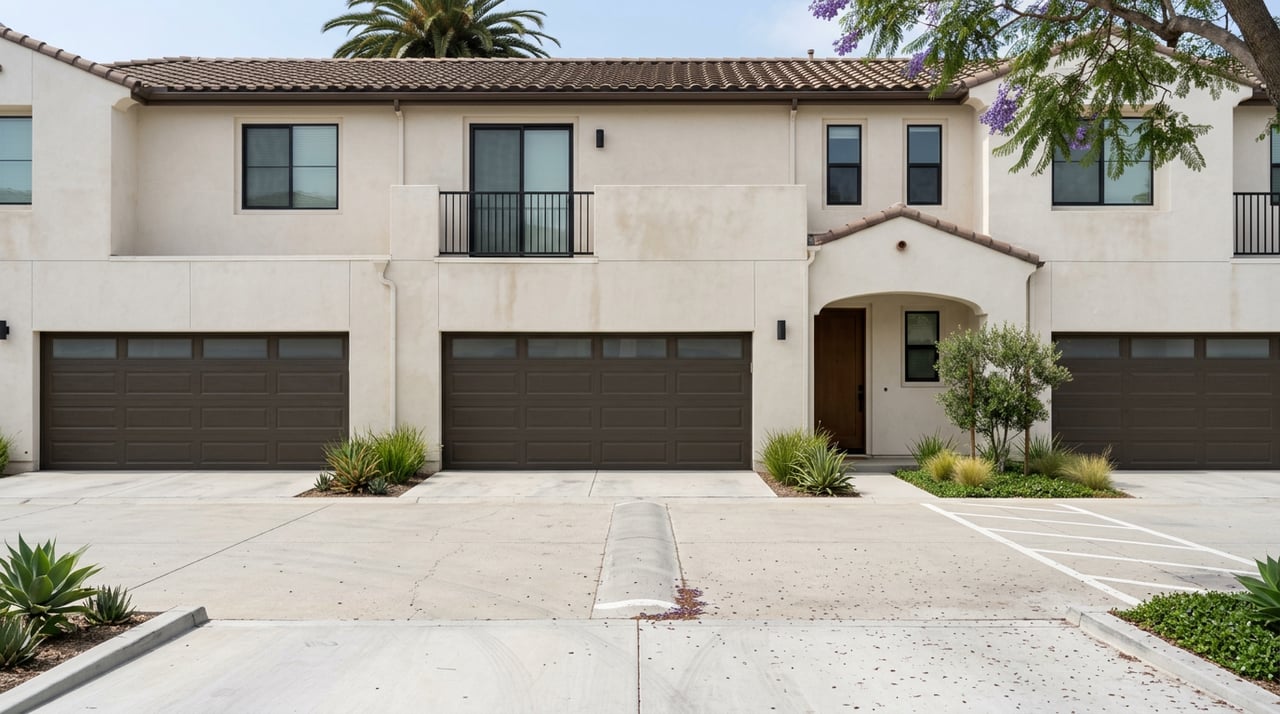
Townhomes in Mission Grove usually sit in gated or clustered tracts from the late 1980s to 1990s. Many have 3 bedrooms, 2 to 3 baths, and about 1,200 to 1,800 or more square feet across two stories. You often get an attached garage and a small patio or yard. Monthly HOA dues can be lower than condo communities with full amenity packages, depending on the complex.
Parking and amenities
Parking varies by community. Condos often include one assigned covered space plus guest parking, with rules set in the CC&Rs. Townhomes more commonly include private garages. Pools and spas are common in condo communities near Alessandro, while townhome enclaves may have simpler common areas. Always confirm your assigned parking, guest rules, and any permit or towing policies in writing.
How HOA dues shape your budget
HOA dues in Mission Grove vary based on amenities and building type. Condos with pools and broader common‑area services often land in the mid‑$300s per month. Gated townhomes or planned communities can run lower, often in the low‑to‑mid hundreds. Some detached homes nearby have no HOA or a small master fee. Always check the listing and the resale certificate for the exact amount and what it covers.
Quick monthly math example
Here is a simple illustration to show how dues change your monthly housing cost. Numbers will vary by rate and property, so use your lender’s current figures.
- Sample purchase price: about $734,000, 20 percent down, 30‑year fixed at a placeholder 6.5 percent.
- Principal and interest: about $3,713 per month.
- Estimated property tax at 1.0 percent: about $612 per month.
- Estimated homeowners insurance: about $100 per month.
- Total without HOA: about $4,425 per month.
- Add a $200 HOA: about $4,625 per month.
- Add a $410 HOA: about $4,835 per month.
Lenders count HOA dues in your debt‑to‑income ratio, so higher dues can reduce your purchase power or require a larger down payment. Confirm with your lender and factor in whether dues include water, trash, insurance, or internet.
What dues include and why it matters
Dues often cover exterior maintenance, roof, landscaping, pools and spas, and sometimes water and trash. That can simplify budgeting, but it also means you carry a fixed monthly cost. Compare total monthly cost across options: mortgage, taxes, insurance, HOA, and any special taxes. A higher‑dues condo can still pencil well if it replaces separate utility or gym costs.
HOA due diligence: the must‑review documents
California’s Davis‑Stirling Act gives you a clear disclosure baseline. Sellers must provide a resale packet that includes governing documents, a statement of assessments, and key financials. See the required items in California Civil Code Section 4525.
Beyond the basics, focus on the association’s budget and reserves. California Civil Code Section 5300 requires an annual budget report with a reserve summary and the association’s most recent reserve study or summary. This study estimates the remaining life and replacement cost of major components. A low reserve balance compared to future costs is the most common reason for special assessments.
If the building has balconies, walkways, or other raised elements, ask for the latest inspection under SB 326. These exterior elevated element inspections are required and often feed into reserve planning. Review the report because it can identify safety repairs that affect dues or trigger special assessments. See Civil Code Section 5551.
Here is a short checklist of what to scan first:
- CC&Rs, bylaws, rules, and any amendments. Look for pet, parking, leasing, and short‑term rental rules.
- Current operating budget, reserve summary, and 2 to 3 years of financial statements.
- The most recent reserve study and any engineer or inspection reports, including SB 326 reports.
- Board meeting minutes from the last 12 to 24 months. Search for keywords like assessment, litigation, reserve study, deferred maintenance, and special assessment.
- Insurance summary with master policy limits and deductibles. Confirm what is covered vs. what you need on your own policy.
- Estoppel or resale certificate with exact current dues, transfer fees, and any unpaid charges on the unit. Civil Code summaries are in Section 4525.
Red flags and loan checks
Watch for low or no reserves relative to future component costs, meeting minutes that discuss large structural work, active major litigation, an outdated reserve study, or missing SB 326 reports where required. These issues can increase your costs later and can also affect financing if the project is considered non‑warrantable.
Ask your lender to check the project’s eligibility through Fannie Mae’s Condo Project Manager or Freddie Mac’s project review tools early in the process. If a project is ineligible, you may need alternative loan programs or a larger down payment. Learn more about standard condo project requirements in Fannie Mae’s condo and co‑op requirements overview.
Offer strategy for value‑minded buyers
- Get full pre‑approval and ask your lender to confirm project eligibility up front for any condo. That reduces the risk of a late denial.
- Try to secure the HOA resale packet before you write. If that is not possible, include an HOA‑document contingency with enough time to review. Three days is often not enough. Here is a helpful explainer on why short review windows fail from GoverningDocs.
- Compare total monthly cost, not just price. If you want a garage and lower dues, target townhomes with simpler amenities. If you want a lower entry price, a condo may be the path, provided the reserves look strong.
- In a lower‑inventory pocket, present a complete offer package with proof of funds and a quick inspection timeline. Keep your HOA review contingency intact until you see the documents.
Check for special taxes
Some Southern California neighborhoods include Community Facilities Districts, also called Mello‑Roos. These are special taxes that appear on the county tax bill. If a parcel in or near Mission Grove carries a CFD, include it in your monthly budget. Riverside County publishes resources to help you identify districts. Start here with the County’s page on Community Facilities Districts.
Quick Mission Grove buyer checklist
Use this as your at‑a‑glance plan.
Before you write an offer:
- Request the full HOA resale packet: CC&Rs, rules, budget, reserve study, last 12 months of minutes, resale certificate, and insurance summary. See Civil Code Section 4525.
- Get lender pre‑approval and ask for an early condo project review if you are buying a condo. See Fannie Mae’s condo requirements.
- Pull the property tax bill and preliminary title report to check for CFD or Mello‑Roos. Use the County’s CFD resources as a reference.
During escrow:
- Review HOA financials and minutes for reserve shortfalls, litigation, or planned special assessments. Reserve disclosure rules appear in Civil Code Section 5565.
- Confirm parking assignments and any guest parking permit or towing rules in writing.
- Order standard home inspections. If the building has elevated elements, request and read the SB 326 engineer’s report. See Civil Code Section 5551.
- If the condo project has underwriting issues, ask your lender about portfolio or non‑QM alternatives before you waive contingencies.
Next steps
If you want location, convenience, and a smart monthly budget, Mission Grove’s condos and townhomes are worth a look. With the right prep, you can spot a solid HOA, compare real monthly costs, and write a clean offer that protects your interests. When you are ready to tour or want a second set of eyes on an HOA packet, connect with a local advisor who knows these buildings well.
If you are weighing options in Mission Grove or nearby Riverside neighborhoods, reach out to Adam Schwarz for a friendly, no‑pressure game plan. You will get neighborhood‑level insight, practical financing checks, and a step‑by‑step path from first tour to closing.
FAQs
What is the difference between condos and townhomes in Mission Grove?
- Condos are often single‑level units around 700 to 1,100 square feet with shared amenities, while townhomes are usually 2‑story homes with 3 bedrooms, 1,200 to 1,800 or more square feet, and attached garages.
How much are typical HOA dues in Mission Grove?
- Many condo communities land in the mid‑$300s per month, while townhome enclaves often run in the low‑to‑mid hundreds; confirm the exact number and inclusions in the resale certificate.
Which California HOA documents should I review before buying?
- Review the governing documents, current budget, reserve study or summary, last 12 to 24 months of board minutes, insurance summary, and the resale certificate as outlined in Civil Code Section 4525.
How do HOA issues affect my mortgage options on a condo?
- Low reserves, major litigation, or missing inspections can make a project ineligible for standard conventional loans; ask your lender to check condo project eligibility early.
Does Mission Grove have Mello‑Roos or special taxes?
- Some parcels in the broader area can carry Community Facilities District taxes; check the property tax bill and use Riverside County’s CFD resources for confirmation.
Is parking guaranteed with condos near Alessandro Boulevard?
- Parking varies by complex; many condos include one assigned space and guest parking with rules, so verify the assignment and any guest permit or towing policy in writing.


