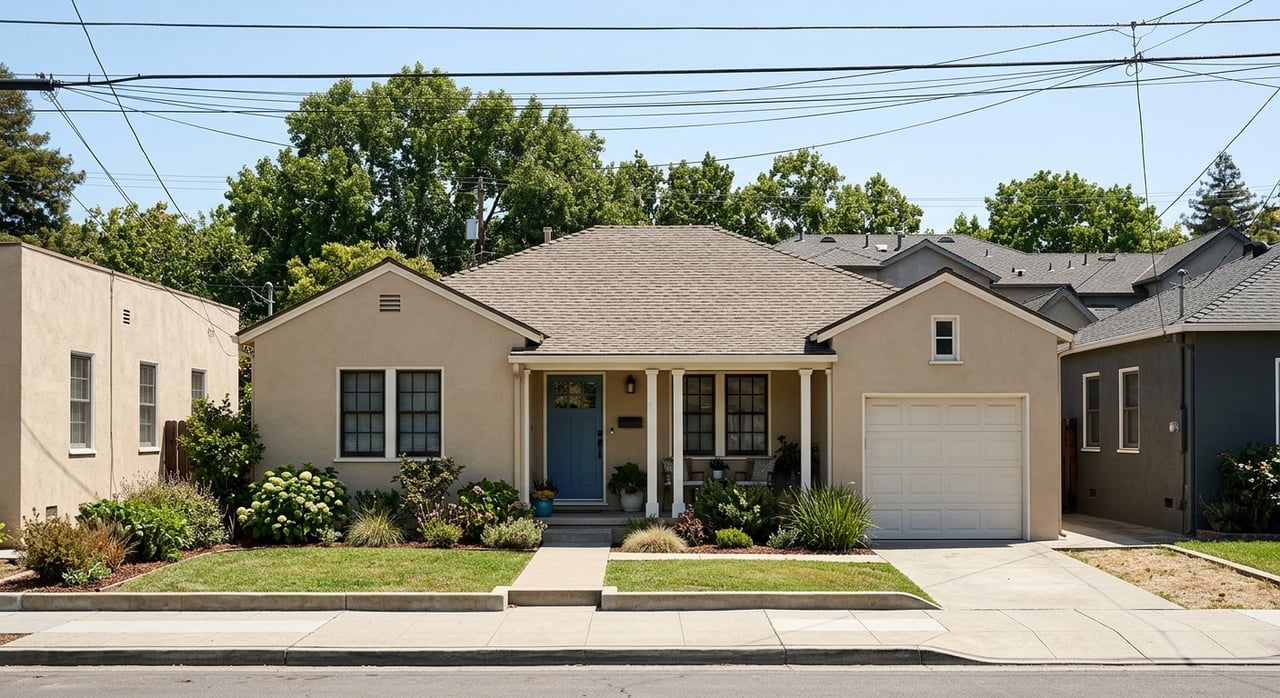
If you own a home in Arlington Heights, you may be sitting on more moving power than you realize. With Arlington Heights posting a median sale price of $867,500 and Riverside at $639,000, many sellers see a clear chance to turn Los Angeles equity into more flexibility inland. If you are thinking about selling in Arlington Heights and relocating to Riverside, this guide will help you understand the numbers, timing, taxes, and neighborhood price ranges so you can move with a solid plan. Let’s dive in.
Why Arlington Heights Sellers Look to Riverside
The biggest driver is simple: price. In February 2026, Arlington Heights had a median sale price of $867,500, while Riverside came in at $639,000 according to Redfin market data for Arlington Heights and Riverside market data. That is a gap of about $228,500, or roughly 26% lower in Riverside.
For many homeowners, that difference creates options. You may be able to reduce your mortgage, buy more space, keep more cash in reserve, or target a different property type than what feels realistic in Los Angeles.
There is also an important pace difference between the two markets. Arlington Heights homes took about 86 days to sell on average, while Riverside homes took about 63 days and received around 2 offers on average based on the same Redfin sources. That means your move may involve selling in a somewhat slower market and buying in a market that still has some competition.
Start With Net Proceeds, Not Just Sale Price
A strong relocation plan starts with what you actually net from the sale, not just what your home might sell for. That number shapes your down payment, monthly payment, reserve funds, and how aggressive you can be when you make an offer in Riverside.
If your Arlington Heights property is within the City of Los Angeles, you should account for transfer taxes. The City of Los Angeles charges a base real property transfer tax of 0.45%, and Los Angeles County also charges a documentary transfer tax of $0.55 per $500 of consideration, according to the City of Los Angeles transfer tax FAQ.
That same city source also notes that Measure ULA may apply only on very high-value transfers, and the thresholds are adjusted annually. Because of that, it is smart to confirm the exact threshold and your transaction details as you get closer to closing.
Understand Capital Gains Rules
Taxes on a home sale and taxes on your gain are not the same thing. Many owner-occupants may qualify for a federal exclusion of up to $250,000 of gain, or $500,000 on a joint return, if they meet the ownership and use tests for a main home, according to the IRS guidance on the sale of a residence.
The key point is that this is a gain exclusion, not an exemption from taxes based on the full sale price. If your home has appreciated significantly, it is worth reviewing how this may affect your move before you finalize your timing.
Plan for Riverside Property Taxes
When you buy in Riverside, your new property is generally reassessed to current market value after a change in ownership. The California State Board of Equalization explains that under Proposition 13, annual increases in assessed value are generally limited to no more than 2% unless there is new construction or a change in ownership, and a purchase typically triggers reassessment at current value under those rules. You can review those details in the BOE property tax publication.
That same BOE publication notes that buyers often receive supplemental tax bills that are separate from the regular annual tax bill. Depending on when your transaction closes, there may be one or two supplemental bills, so this is something to include in your moving budget.
Proposition 19 Could Change the Math
For some homeowners, Proposition 19 can be one of the most important tools in a relocation plan. The California State Board of Equalization Proposition 19 page says eligible homeowners who are 55 or older, severely and permanently disabled, or victims of wildfire or natural disaster may be able to transfer their base-year value to a replacement primary residence anywhere in California.
The BOE also states that eligible homeowners can do this up to three times, and the replacement home can be purchased before or after the sale of the original property as long as both transactions happen within two years. If the replacement property is of equal or lesser value, the transferred base-year value can generally move without adjustment, while higher-value replacement homes may still qualify with a partial adjustment.
One detail matters here: the BOE says the claim is filed after both transactions are complete, not through escrow. If you may qualify, timing and paperwork deserve attention early in the process.
Time the Sale and Purchase Carefully
Selling in Arlington Heights and buying in Riverside is often less about one transaction and more about coordinating two. The cleaner your timing plan, the less stress you are likely to feel.
According to Fannie Mae’s home offer guidance, an offer can include earnest money, contingencies, timing information, and flexibility on the closing date. Contingencies are conditions that must be satisfied before the purchase can move forward, such as inspection or financing approval.
A home-sale contingency can be useful if you need proceeds from your Arlington Heights sale before closing in Riverside. But there is a tradeoff. Realtor.com’s explanation of home-sale contingencies notes that sellers often view these clauses as less attractive because they may delay the transaction, and some sellers may prefer offers with fewer conditions.
That matters in Riverside because the market is not standing still. With homes selling in about 63 days and receiving around 2 offers on average, contingent buyers should be prepared to make the rest of the offer as strong as possible.
How to Strengthen Your Riverside Offer
If you need to sell first, preparation becomes your advantage. A stronger offer often comes from reducing uncertainty for the Riverside seller.
Here are a few practical ways to improve your position:
- Get financing lined up early
- Know your likely Arlington Heights net proceeds before shopping seriously
- Keep your Arlington Heights sale moving with realistic pricing and strong marketing
- Be clear on your timing needs before writing offers
- Consider whether flexibility on the closing date could help your offer compete
These steps do not remove every challenge, but they can make your move more predictable and your Riverside offer more competitive.
Riverside Is a Price Ladder
One of the biggest mistakes buyers make is thinking of Riverside as one price point. It is better understood as a price ladder, with different neighborhoods and submarkets offering a wide spread of options.
According to Realtor.com Riverside area data, current median listing prices range from about $407,500 in University of Riverside to about $1.55 million in Alessandro Heights. Many central and western Riverside neighborhoods cluster in the $600,000 to $750,000 range.
That range matters if you are arriving with equity from Arlington Heights. Depending on your net proceeds and monthly payment goals, you may be shopping in very different parts of the Riverside market.
Lower-Priced Riverside Options
If your goal is to maximize affordability, Riverside has several neighborhoods with lower current median listing prices. Realtor.com shows University of Riverside around $407,500, Eastside around $555,000, Arlington around $565,000, Ramona and Northside around $585,000, and Arlanza around $591,500.
It also places Central Riverside around $605,000, with West Riverside and North Riverside roughly in the $620,000 to $640,000 range. Based on the price spread, these areas can reasonably be viewed as more central, urban, or entry-level options within the broader Riverside market.
Mid-Range and Upper-Mid Options
If you want to stay closer to the middle of the Riverside pricing spectrum, several well-known areas fall into that range. Realtor.com data shows Canyon Crest around $699,000, while Downtown Riverside lands roughly between $655,000 and $735,000 depending on the dataset.
Orangecrest is shown around $754,350 to $799,000, which places it toward the upper end of the mid-market. Based on the available pricing data, Canyon Crest and Orangecrest can reasonably be seen as more suburban choices compared with lower-priced central areas.
Premium Riverside Choices
If you are moving with substantial equity and want to target the upper tier of the market, Riverside also offers premium options. Realtor.com places Lake Hills-Victoria Grove around $950,000 and Alessandro Heights around $1.55 million.
From a pricing standpoint, Alessandro Heights stands out as a luxury-tier market within Riverside. That gives some Arlington Heights sellers a path to move inland while still targeting a high-end replacement home.
What This Move Can Look Like Financially
An Arlington Heights seller does not automatically need to “downsize” to make Riverside work. In many cases, the move is about reshaping your equity position.
For example, if your home sells near the Arlington Heights median of $867,500, the Riverside median of $639,000 suggests a lower entry point before closing costs, financing costs, taxes, and any property-specific differences. The actual outcome depends on your mortgage balance, transfer taxes, possible gain exclusion, and the price tier you choose in Riverside.
That is why planning should move in this order:
- Estimate likely sale price in Arlington Heights
- Calculate probable net proceeds after taxes and costs
- Review your Riverside price range by neighborhood tier
- Factor in reassessment and possible supplemental tax bills
- Build a timing strategy for the sale and replacement purchase
Why Local Riverside Guidance Matters
Once you narrow your budget, Riverside becomes a neighborhood-by-neighborhood search. Pricing in Downtown Riverside, Canyon Crest, Orangecrest, and Alessandro Heights can look very different, and each range can support a different strategy.
That is where local market knowledge becomes useful. Instead of treating Riverside as one destination, you want to compare realistic options, watch current market pace, and match your timing to the part of the city you actually want to buy in.
If you are planning to sell in Arlington Heights and relocate to Riverside, the smartest first move is to understand what your Los Angeles home could realistically net and how that translates into buying power across Riverside’s different price bands. When you are ready to map out the move, connect with Adam Schwarz for a clear strategy built around your equity, timing, and Riverside neighborhood goals.
FAQs
What is the price difference between Arlington Heights and Riverside?
- Based on Redfin data cited above, Arlington Heights had a median sale price of $867,500 and Riverside had a median sale price of $639,000, a difference of about $228,500.
How long does it take to sell in Arlington Heights compared with Riverside?
- Redfin reported average market times of about 86 days in Arlington Heights and 63 days in Riverside, which suggests sellers should plan carefully when coordinating both transactions.
What transfer taxes apply when selling a home in Los Angeles?
- If the property is in the City of Los Angeles, the city charges a 0.45% base transfer tax and Los Angeles County charges $0.55 per $500 of consideration, with Measure ULA potentially applying only to certain high-value transfers.
Can a home sale contingency help when moving from Arlington Heights to Riverside?
- Yes, a home-sale contingency can protect you if you need your current home to sell first, but it can make your offer less attractive to Riverside sellers compared with offers that have fewer conditions.
How does Proposition 19 affect a move to Riverside?
- Eligible homeowners may be able to transfer their base-year value to a replacement primary residence anywhere in California under Proposition 19, subject to the BOE rules, timing requirements, and claim process.
Are Riverside home prices the same across every neighborhood?
- No, Realtor.com data shows a wide range, from about $407,500 in University of Riverside to about $1.55 million in Alessandro Heights, so Riverside should be viewed as a market with multiple pricing tiers rather than one average price.