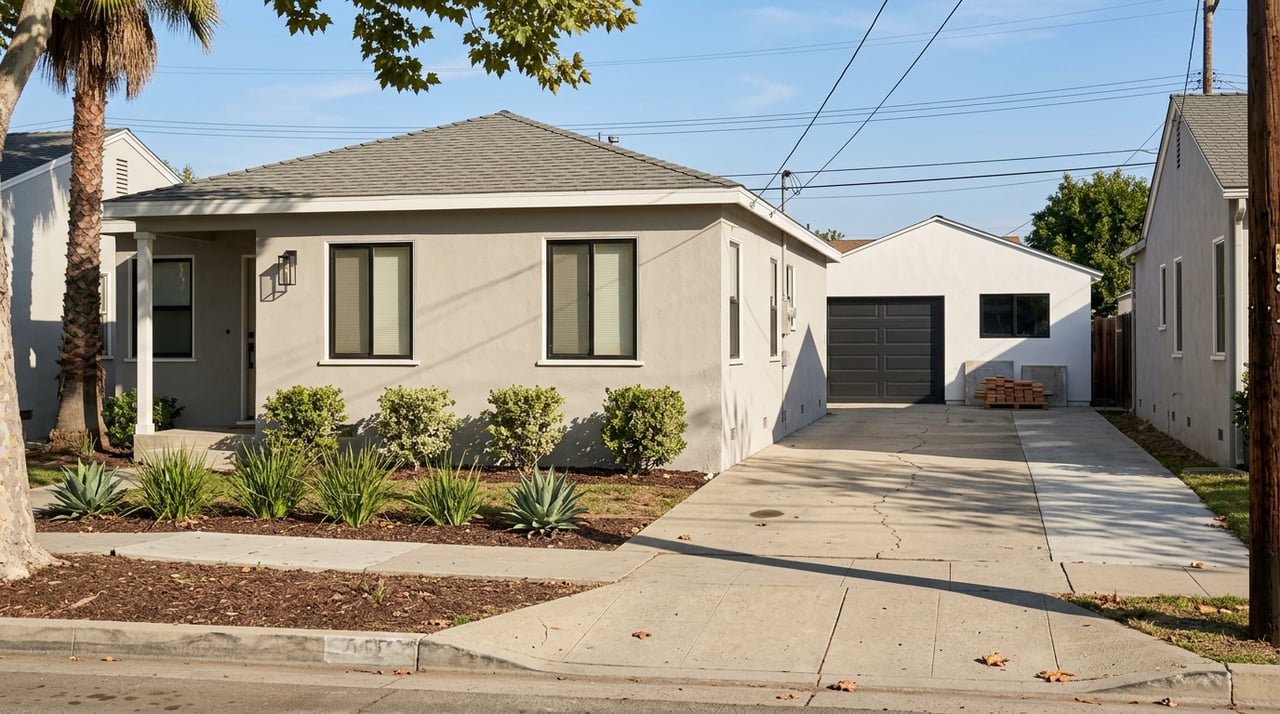
Looking for a Downtown Riverside investment that can produce resilient cash flow and long-term upside? Homes with space for an accessory dwelling unit can do both if you understand local rules, costs, and lending. You want clear steps, not guesswork, so you can move from idea to offer to permits with confidence. In this guide, you’ll learn the specific ADU standards that matter in Downtown Riverside, conservative rent and cost ranges for pro formas, and a simple due diligence checklist you can run before you write an offer. Let’s dive in.
Why Downtown Riverside works
Downtown Riverside is guided by the City’s Downtown Specific Plan, which encourages more housing, mixed use, and walkable infill across several districts while maintaining a Mission Inn historic overlay. That policy backdrop supports adding residential units and should factor into your long-term appreciation view. You can review the districts and overlay map in the City’s Downtown Specific Plan.
Demand is supported by cultural anchors like the Mission Inn and Fox Theater, regional employment, and nearby universities. Growth at UCR has reinforced steady rental demand in and around the core, which can help stabilize ADU lease-up and renewal cycles. Pair that with Downtown’s amenities and commuter access, and you have a solid location story for income property.
ADU rules that unlock value
Riverside’s local code mirrors California’s pro‑ADU framework and removes several common barriers. According to city guidance summarized by the Tiny Home Industry Association, Riverside allows ADUs, JADUs, and movable ADUs, with size caps that align to state law, no minimum lot size, and explicit permission for garage conversions. The City also:
- Requires no off‑street parking for ADUs/JADUs/MADUs.
- Does not require replacement parking when converting a garage.
- Exempts City impact fees for ADUs under 750 square feet.
- Does not require owner occupancy for ADUs (JADUs still have a deed‑restriction).
- Requires rental terms longer than 30 days for ADUs, so no nightly short‑term rental use.
You can review these practical standards in the association’s summary of Riverside’s code and state law alignment here: movable and accessory dwelling unit legislation overview.
Historic and overlay checks
Parts of Downtown fall within the Mission Inn Historic District overlay. If your target home sits in a historic area, your ADU must meet objective design standards, and you should expect additional review steps that can affect massing, materials, or placement. Start by confirming your parcel’s district and overlay using the City’s Downtown Specific Plan, then factor potential soft‑cost and timeline impacts into your underwriting.
Faster paths: permit‑ready plans
Riverside offers permit‑ready ADU plan sets through its Dwell Riverside program, plus a self‑certification pilot for qualified professionals and an amnesty pathway for some existing unpermitted units. If your lot qualifies, these programs can lower plan costs and shorten approvals, which improves IRR by reducing time to rent. Check eligibility and process steps on the City’s page for permit‑ready ADU plans.
Rents, costs, and realistic returns
Citywide rent indexes in early 2026 place average Riverside rents in the low $2,200s, and Downtown listings commonly run higher. For underwriting an ADU in Downtown, a conservative starting assumption for a 1‑bed unit is roughly $1,600 to $2,400 per month until you confirm unit‑level comps. Build your model at the low end first, then run sensitivity.
Typical ADU costs in 2024–2026
Costs vary by scope, site, and finish level, but statewide research and industry surveys point to these broad ranges:
- Garage conversion or JADU: often the lowest cost path. Literature shows a very wide band from about $50,000 for very basic work up to around $150,000 depending on systems and upgrades.
- New detached ADU: typical turnkey ranges in Inland Southern California often fall between $150,000 and $400,000 depending on size, utilities, and finishes.
Use three local bids to validate your scope. For context, see the Terner Center’s overview on ADU costs and delivery trends: Jumpstarting the ADU market.
Two quick, conservative pro formas
These simple examples use common inputs to illustrate range. Adjust to your exact scope, lot, and finishes.
Garage conversion to 1‑bed (about 450 sq ft)
- Build cost: $120,000
- Rent: $1,800/month (within the conservative Downtown band)
- Operating set‑asides: 10% of rent for maintenance/management = $180/month
- Incremental property tax on added value: about 1.1% of $120,000 = $110/month (see how CA supplemental assessments work in this property tax explainer)
- Added insurance: estimate $30/month
- Estimated net before debt: $1,800 − $180 − $110 − $30 = $1,480/month
- Simple annual yield on cost (all‑cash): about 14.8%
New detached 1‑bed (about 700 sq ft, under 750 sq ft for City impact‑fee exemption)
- Build cost: $250,000
- Rent: $2,100/month
- Operating set‑asides: 10% of rent = $210/month
- Incremental property tax on added value: about 1.1% of $250,000 = $229/month
- Added insurance: estimate $50/month
- Estimated net before debt: $2,100 − $210 − $229 − $50 = $1,611/month
- Simple annual yield on cost (all‑cash): about 7.7%
Run sensitivity at rents plus or minus 10 to 20 percent and completion cost plus or minus 20 percent. If you plan to finance construction, layer in interest carry and draw timing. Riverside’s permit‑ready plans can shorten pre‑rent months, which boosts project IRR.
Financing with ADU income
If you plan to qualify using rental income, agency rules matter. Fannie Mae allows ADU rent in qualifying for certain purchase and limited cash‑out refinances, but it requires documentation and applies limits. Lenders typically count 75% of gross market rent when using an appraiser rent schedule. Many also cap how much ADU income can contribute to total qualifying income. Review Fannie’s guidance on rental income and ask your lender what they will accept.
Practical tips:
- Confirm whether ADU income is allowed for your exact loan program and occupancy.
- Expect to provide an appraiser’s rent schedule and possibly a lease or tax returns.
- Underwrite at 75% of projected gross ADU rent for lender calculations unless your lender instructs otherwise.
Small multifamily context
Downtown Riverside also offers small multifamily opportunities where value‑add and ADU potential may overlap. Inland Empire cap‑rate bands widened from 2020–2022 levels, with mid‑single digit averages on stabilized, higher‑quality assets and higher yields typical for small or value‑add properties. Always use current local comps and actuals to calibrate your target yield and renovation budget.
Due diligence checklist
Use this checklist before you write an offer or remove contingencies:
- Parcel and overlay checks
- Confirm your lot is in the Downtown Specific Plan and whether it sits inside the Mission Inn historic overlay using the City’s plan document.
- Identify flood hazards or cultural resource areas that can affect eligibility for permit‑ready plans on the City’s permit‑ready ADU plans page.
- ADU standards that decide feasibility
- Verify size caps, unit counts, rental term rules over 30 days, and fee exemptions for ADUs under 750 sq ft. See the summarized local standards in the ADU legislation overview.
- Confirm no parking is required and that garage conversions do not trigger replacement parking.
- Site and structure
- Measure usable yard area, check access for equipment, and note utilities. Assess garage convertibility and any easements or trees that could affect placement.
- Market underwriting
- Pull Downtown‑level rent comps for studio and 1‑bed units that match your planned size and finish. Underwrite at the low end of the range until you validate demand for stand‑alone ADUs.
- Costs and timeline
- Get 2 to 3 contractor bids for both a garage conversion and a detached ADU. Budget a 15 to 20 percent contingency. Use the City’s permit‑ready plans if eligible to reduce design cost and time.
- Fees and utilities
- Confirm if your design stays under 750 sq ft to avoid City impact fees and whether any proportional utility connection charges apply.
- Financing and exit
- Ask your lender how they treat ADU income, what documentation they require, and whether they cap ADU rent used to qualify. Model the supplemental property tax increase on completion and any added insurance.
- Operations and compliance
- Plan for minimum 30‑day leases. Confirm habitability and local rental requirements. If you create two or more units on one parcel, check any applicable smoke‑free multi‑unit rules and disclosure obligations.
Case types that fit
- House‑hack a historic‑adjacent bungalow with a garage conversion JADU to offset your mortgage while you hold for long‑term appreciation.
- Buy a Downtown single‑family on a deeper lot and add a sub‑750 sq ft detached ADU using permit‑ready plans to shorten approvals and avoid City impact fees.
- Target a small value‑add multifamily near the core where an ADU can add one more legal unit and diversify your rent roll.
Work with a local advisor
If you want a Downtown Riverside purchase mapped to real ADU feasibility, permits, costs, and rents, you need a hyperlocal plan, not rules of thumb. I help investors source the right lots, run conservative pro formas, and navigate City programs that protect yield. For a Downtown‑specific ADU game plan, connect with Adam Schwarz.
FAQs
Can you build an ADU on any Downtown Riverside lot?
- Most residential lots can host at least one ADU or a JADU under state law and Riverside’s code, but historic overlays, flood zones, and site conditions can limit feasibility. Verify with City Planning early.
Do you need parking for a Riverside ADU?
- No. Riverside’s code requires no off‑street parking for ADUs, JADUs, or MADUs, and it does not require replacement parking when converting a garage.
Are there fee waivers for smaller ADUs?
- Yes. ADUs under 750 square feet are exempt from City impact fees. Always confirm any proportional utility connection charges before permitting.
Can you use a Riverside ADU as a short‑term rental?
- No. If rented, ADUs must be leased for terms longer than 30 days, so plan for long‑term leases in your pro forma.
Can lenders count ADU rent when you qualify?
- Often yes, but with limits. Many lenders follow Fannie Mae guidance, count 75% of gross market rent with an appraiser rent schedule, and may cap how much ADU income can be used. Confirm policy with your lender.