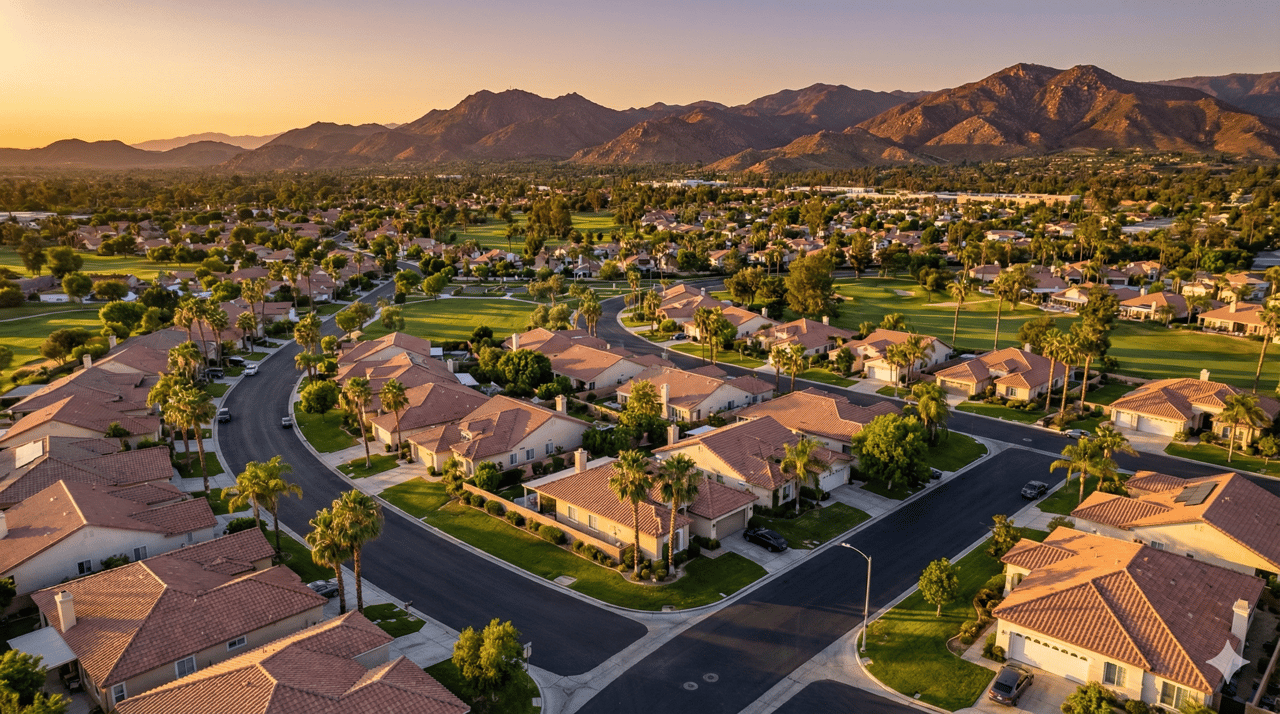
Riverside has long been the answer to the question every Southern California family eventually asks: 'Where can we actually afford to live?' But with home prices rising dramatically across the entire region over the past several years, buyers are reasonably asking whether the affordability advantage still holds. The honest answer is: yes, substantially — but the definition of 'affordable' has shifted significantly, and buyers need to understand the current reality clearly.
The Price Trajectory: What Happened
From 2019 to 2023, Riverside home prices appreciated by roughly 50 to 60 percent — one of the sharpest run-ups in the city's history. A home that sold for $400,000 in 2019 was regularly trading at $600,000 or more by mid-2022. That appreciation has moderated, and the market has entered a period of stabilization, but prices have not meaningfully retreated from their peaks. Buyers entering the market today are working with a significantly higher baseline than buyers from five years ago.
The Affordability Index: A Better Metric Than Price
Raw price comparisons only tell part of the story. The California Association of Realtors' Housing Affordability Index (HAI) measures the percentage of households that can afford a median-priced home at current interest rates, given median income levels. This is a more meaningful measure of true affordability because it accounts for both price and the cost of financing.
By this measure, Riverside and San Bernardino County consistently show affordability rates that are two to three times higher than Los Angeles County or Orange County. In a recent quarter, the Inland Empire's HAI was in the mid-20s percentage range — meaning about 25% of households could afford the median home. In Los Angeles, that figure drops to single digits. In Orange County, it's similarly low. Riverside is genuinely more accessible, not just cheaper in absolute dollar terms.
Income vs. Home Prices: The Stress Test
The median household income in Riverside is approximately $75,000 to $80,000. At today's median home prices and interest rates, a buyer putting 10% down on a median-priced Riverside home would be allocating roughly 38 to 42% of gross income to housing costs. That's above the traditional 28% guideline, reflecting the broader affordability pressure affecting the entire country. But it's dramatically better than the equivalent calculation in LA or OC, where the same income against a higher home price produces payment-to-income ratios that are simply untenable for most families.
The Affordable Spectrum Within Riverside
Affordability isn't monolithic within the city. Entry-level buyers — first-time purchasers, those with limited down payments — can still find condos and smaller townhomes in neighborhoods like Arlanza, La Sierra, and portions of central Riverside in the $400,000 to $500,000 range. The classic family home in Mission Grove or Orangecrest typically runs $650,000 to $800,000. The luxury end in Hawarden Hills and Alessandro Heights can reach $1.5 million and beyond. The market has room for a wide range of budgets, which is itself an affordability advantage.
The Verdict for 2026
Yes, Riverside is harder to afford than it was in 2019. No, it has not stopped being significantly more affordable than the rest of Southern California. For a family comparing their options across the region, Riverside continues to offer the best combination of location, quality of life, and attainable homeownership in the metro area. The buyers who are struggling most are those at the margin of qualification — first-time buyers with minimal savings and limited credit history — and that reflects a national affordability crisis that Riverside shares with the rest of the country, just in a milder form.
Feeling uncertain about what you can afford in today's market? Let's look at your specific numbers together. A realistic budget conversation is the most valuable thing we can do to start your search right.