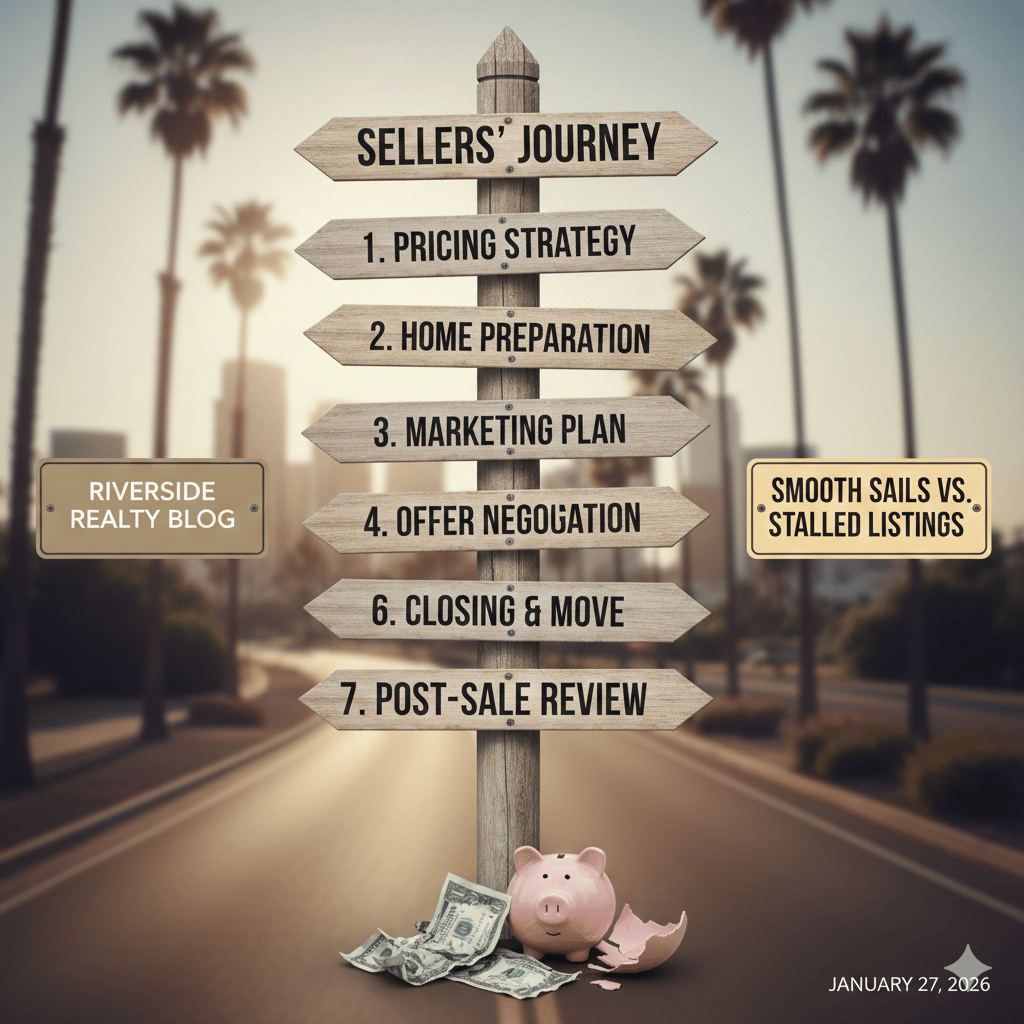
Selling your Riverside home isn't complicated, but it is sequential. Make the right decisions in the right order, and you'll likely net thousands more while reducing your stress. Get the sequence wrong, and you'll spend months wondering why homes down the street are selling while yours sits.
After helping close over 150 transactions in Riverside over the past three years, I've identified seven decision points that separate successful sales from frustrating ones.
**Decision 1: Timing — When Do You Actually Need to Move?**
This sounds basic, but it drives everything else. I can't count how many sellers tell me "we need to sell as soon as possible" when what they really mean is "we want to move sometime in the next six months."
If you have genuine flexibility, you can time your listing to hit peak buyer activity—typically late February through May in Riverside, and again in September. If you're on a tight deadline, we build strategy around that constraint, but you need to know which situation you're actually in.
**Decision 2: Pricing Strategy — Aggressive, Market, or Competitive?**
This is where most sales are won or lost. You have three realistic approaches:
*Market pricing* means listing at what comparable sales data suggests your home is worth. This typically generates steady showing activity and attracts serious buyers.
*Aggressive pricing* means listing 5-10% above market comparables, betting that you'll either find the one buyer who'll pay it, or you'll reduce price later. This works occasionally in hot markets but usually just burns your best marketing window.
*Competitive pricing* means coming in slightly below market value to intentionally generate multiple offers. When executed correctly in neighborhoods like Canyon Crest or Hawarden Hills, this often nets more money than market pricing because you're creating competition among buyers.
The right strategy depends on your timeline, your home's condition, and current neighborhood inventory.
**Decision 3: Preparation — How Much Should You Invest?**
Every seller asks: "Should I renovate before selling?" The answer is almost always "it depends on what you mean by renovate."
Full kitchen and bath remodels rarely return their investment when you're about to sell. But fresh paint, deep cleaning, landscaping touch-ups, and minor repairs? Those typically return $3-5 for every dollar spent.
The key question: What's preventing buyers from making full-price offers on your home? If the answer is "nothing major, just normal wear," then light preparation makes sense. If the answer is "the kitchen is from 1987 and the master bath has cracked tiles," you're better off pricing that into the list price rather than attempting a rushed remodel.
**Decision 4: Marketing Approach — Where Will Buyers Find Your Home?**
In 2026, virtually every Riverside home buyer starts their search online. Your home needs professional photography—period. That's non-negotiable.
Beyond that, the right marketing mix depends on your price point and property type. Homes under $600K need maximum exposure across Zillow, Realtor.com, and Redfin to capture first-time buyers. Luxury properties above $900K often benefit from targeted social media campaigns and email marketing to qualified buyers and out-of-area agents.
Your agent should explain exactly where your listing will appear and how buyers in your price range will discover it.
**Decision 5: Showing Flexibility — How Accessible Will You Make It?**
Homes that are easy to show sell faster and for more money. That's just reality. If buyers or their agents have to jump through hoops to schedule a showing, many will simply skip your property.
I understand that having your home shown is disruptive, especially with kids, pets, or work-from-home schedules. But every restriction you place on showing access directly reduces your buyer pool. The goal is finding the balance between your lifestyle needs and market reality.
**Decision 6: Negotiation Boundaries — What's Flexible and What's Not?**
Before you receive your first offer, you should know: What's your absolute minimum acceptable price? Will you credit closing costs? Handle repairs? Offer a home warranty?
You don't have to accept everything a buyer requests, but you should know in advance which items you're willing to negotiate and which are deal-breakers. This prevents emotional decision-making when you're sitting across the table from a buyer's offer at 8 PM on a Friday.
**Decision 7: Contingency Planning — What Happens If It Doesn't Sell Quickly?**
Every seller should enter the market with a Plan B. If you're not getting showing activity within two weeks, what's your response? If you're getting showings but no offers after 30 days, what changes?
The most common Plan B is a price reduction, but it's not the only option. Sometimes enhanced marketing, staging, or addressing a deferred maintenance issue is the right pivot.
**Putting It Together**
These seven decisions are interconnected. Your timeline influences your pricing strategy. Your pricing strategy influences how much you should invest in preparation. Your preparation level influences your marketing approach.
The sellers who net the most money and experience the least stress are the ones who think through these decisions holistically with their agent before the listing goes live—not reactively after the first three weeks of disappointing results.
*Selling your Riverside home successfully isn't about luck. It's about making informed decisions in the right sequence.*